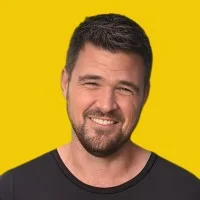
If your body doesn't work, nothing is fun. The most money in the world won’t fix that.
 If your body doesn't work, nothing is fun. The most money in the world won’t fix that.
Chris Erler,
Erler Ventures
Resources and Links
- Erler Ventures: erlerventures.org
- Chris's Substack: chriserler.substack.com
- Substack article: What I Found When I Finally Looked Inside My Own Business
- Book mentioned: The Psychology of Money by Morgan Housel
- Book mentioned: The Lean Startup by Eric Ries
- Book mentioned: The Mom Test by Rob Fitzpatrick
Key Timestamps
(01:05) What "doing things differently" meant growing up in Austria
(02:30) What drove him to start his first company
(05:00) The goal was financial freedom, not a big idea
(07:30) It worked on the first try: €20M in four years
(10:15) What that velocity felt like emotionally
(12:15) "I tried to spend money. I didn't like it."
(14:15) The dopamine kick and the ego trap
(15:45) The body breaks: hospital at 11pm, answering Slack
(18:15) The PE deal changed everything
(19:30) "My why was not there, and that crushed me"
(22:30) What the exit money actually felt like
(24:30) The shift from founder to employee
(25:45) Watching ComX go from acquisition to insolvency
(28:30) Why failure carries shame in Europe but not the US
(32:00) Building Erler Ventures: helping founders not burn out
(35:00) "If your body doesn't work, nothing is fun"
Episode Summary
Chris Erler grew up in a small town in the Austrian Alps where a career at GE or Swarovski was the definition of making it. He did the corporate thing for a while, but it never fit. He didn't want to be a small wheel in a big machine. He wanted impact.
In 2018, he and two co-founders quit their jobs, pooled €10,000, and started collecting unemployment in Copenhagen while building an MVP for ComX, a B2B sales enablement platform targeting the German-speaking market. Three mechanical engineers, no startup experience, and a market that told them cold email was illegal and their idea would never work. They trusted each other, trusted the methodology, and kept validating with customers.
It worked. And fast. ComX found traction almost immediately, grew 125% year over year, and hit €20M in revenue in about four years with 56% EBITDA margins. No VC. No outside capital. Chris was in his mid-20s running a company at a velocity most founders only dream about. When I asked what that kind of growth felt like, he was honest: it was a cocktail of emotions. Pride, sure. But also constant stress. The sales engine was working, but the delivery side was always struggling to keep up. He knew the churn would eat them alive if the growth ever slowed.
His lifestyle didn't change much with the money. He tried spending it and didn't enjoy it. What he valued was freedom: the ability to decide when to work, who to work with, and not report to anyone. He read The Psychology of Money early on and it anchored him. Freedom was the highest good.
But the stress was taking a toll he didn't register. His body was breaking down. He ended up in a hospital at 11pm answering Slack messages while his fiancée watched. His spine had been deteriorating from chronic stress for over a year and he hadn't even acknowledged the pain. When the private equity deal loaded the business with debt and new shareholders, the pressure compounded. He went from being an operator he loved being to someone caught between shareholders and a team that wasn't buying into the PE story. He described it as the thing that finally crushed him.
In 2022, they sold a majority stake to Flex Capital at multiples none of them ever imagined. Life-changing money. But the shift from founder to employee inside a PE structure changed everything. Budgets, governance, management layers. The freedom that had defined their bootstrapped years was gone. Then the European economy contracted. Customers froze budgets. Competition caught up. ComX went through insolvency in 2024 and was sold in an asset deal that preserved the team and customers, but the founders walked away with nothing from this second chapter.
Chris talks openly about how failure carries a different weight in Europe than it does in the US. In Germany, insolvency is tied to shame in a way that doesn't exist in American startup culture. Going through it changed his perspective. He doesn't see it as a loss. He sees it as an MBA on steroids.
Today, Chris runs Erler Ventures, advising DACH founders and PE operators on exit-readiness and operational scaling, drawing on his own experience and 800+ founders he's coached. His definition of success has shifted from financial freedom to something simpler: fun, health, freedom, and great people around him. When your body has quit on you once, no amount of money in the world makes up for losing your health.
Connect with Melissa
- Connect with Melissa at melissakwan.com and subscribe to 'your founder next door', Melissa's weekly newsletter on what it's like to build a company without an abundance of resources and friends in high places.
- Follow Melissa Kwan on LinkedIn where she share stories & lessons from her founder journey weekly.
- Find her on @themelissakwan on Instagram, TikTok, Twitter and YouTube where she shares short videos of business advice and other truth-bomb sound bites.
About ProfitLed
Most startup advice is built around venture capital, hypergrowth, and unicorn exits. ProfitLed is for the rest of us. Hosted by Melissa Kwan, 3x bootstrapped founder and CEO of eWebinar, ProfitLed explores what it's really like to build a company on your own terms, without an abundance of resources and friends in high places.
Season Three goes beyond strategy as we explore the intersection of Passion, Profit, and Purpose and what happens when founders evolve and come into financial success. If you're building something real, this one's for you.
This podcast was brought to you by eWebinar.