Quick Summary
Many brokerages provide and encourage real estate agent training but struggle to get agents to show up. Agents’ days run on client schedules, so a live session on a fixed schedule only reaches a fraction of them. Build an interactive, on-demand training program agents can access and complete around their schedules. Make sure it has chat so they can ask questions while they watch, and tracking so you know who finished and who needs a follow up. This approach lets agents take training on their own time, including off hours when your team isn’t working.
The Participation Problem Every Brokerage Has but Nobody Wants to Admit
In June 2026, Fathom Realty president Lori Muller described an “agent participation crisis,” noting that agents “ask for training but rarely show up for workshops.” The problem spans every real estate brokerage, from traditional and virtual firms to independents and franchises.
In a NAR article, one broker-owner said about 40% of the brokerage’s agents attend weekly training. Most training is still delivered live, in person or by livestream, and an agent’s day belongs to their clients.
More live sessions won’t fix it. Agents need on-demand programs that fit their schedules, because live training needs two sides to show up and you only control one. Below is a six-step approach to building a program agents can show up for and finish.
Why Listen to Us?
At eWebinar, we built an on-demand video platform with chat that brokerages use to deliver real estate agent training at scale. Over 70 real estate companies train agents on eWebinar, including brokerages like eXp Realty, John L. Scott, Realty ONE Group, Century 21 Canada, and Century 21 Judge Fite, and proptech companies like SkySlope, RealScout, and Flexmls.
“With eWebinar, we’re getting the kind of attendance numbers in a single week that we used to get for an entire month.” - Emily Major, Product Trainer, NextHome
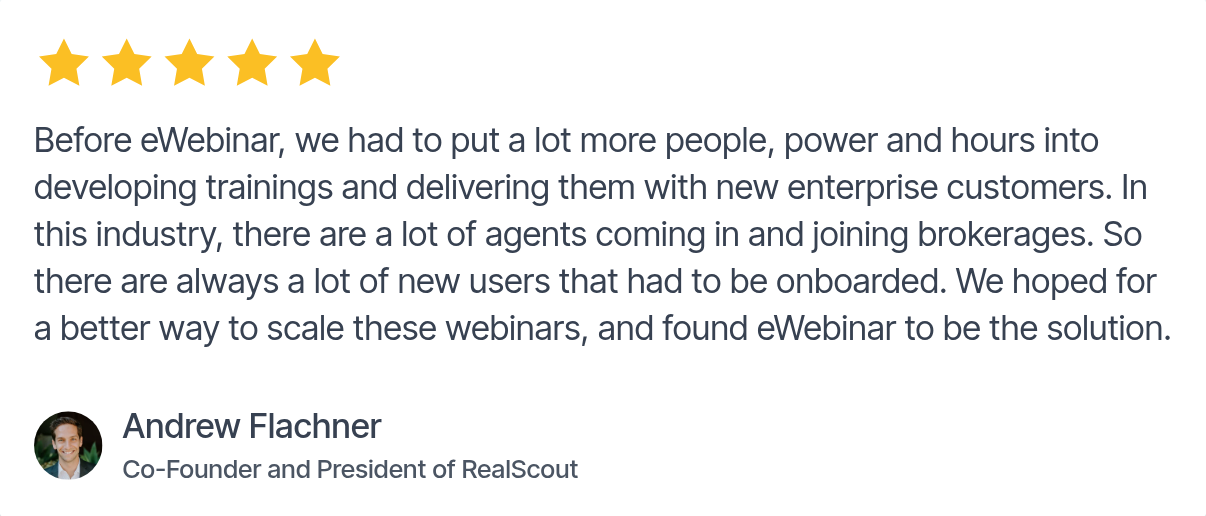
Using eWebinar, SkySlope went from hosting one or two training sessions a week to offering six sessions a day, five days a week.
What is Real Estate Agent Training?
Real estate agent training covers everything an agent needs to learn beyond their pre-license coursework. It’s separate from the continuing education (CE) agents complete through state-approved providers to renew their license.
The training that helps agents get better at their jobs and sell more typically falls into four areas:
- Brokerage systems and technology. Your CRM, transaction management platforms, lead-routing tools, and other systems agents use every day need clear training. New agents may need guidance to use them confidently.
- Sales and lead conversion. Skills like prospecting methods, follow-up cadences, listing presentations, buyer consultations, and negotiation can help agents build their businesses and generate closings.
- Market knowledge. Local pricing trends, neighborhood-level inventory, and other conditions that help agents advise clients with confidence change constantly. Regular training will keep agents updated.
- Onboarding. The first 30 to 90 days are crucial for new agents to find their footing at your brokerage. A structured onboarding process gives them a clear starting point for learning your systems, processes, and requirements.
Brokerages know what they want agents to learn. The challenge is making that training accessible enough for agents to complete and apply on their own schedule.
How to Build a Real Estate Agent Training Program
1. Separate what agents need on day one from what can wait
Before you build a training library, figure out what your agents must know to start producing at your brokerage as soon as possible. A common mistake is trying to teach everything in the first few weeks. New agents usually don’t need that much information all at once. Give them the essentials first, then introduce the rest as they gain experience.
To do this, sort your training into these two buckets:
- Required training. It’s everything agents need from day one to work at your firm, like your CRM workflows, transaction management process, and how leads get assigned.
- Skill-building training. These aren’t mandatory, but they help agents get better and sell more over time. They include listing presentation coaching, negotiation techniques, pricing strategy, and social media marketing.
Whichever bucket a session falls into, make it available all the time. Agents have unpredictable schedules and can’t attend when you tell them to, so every training should be there whenever they want to level up.
2. Plan for the agents who can’t make your live sessions
Real estate agents are independent contractors working around unpredictable client schedules. Between showings, inspections, and last-minute appointments, there will always be agents who can’t make a live training session. And if training clashes with a client appointment, the client will usually come first. As they should!
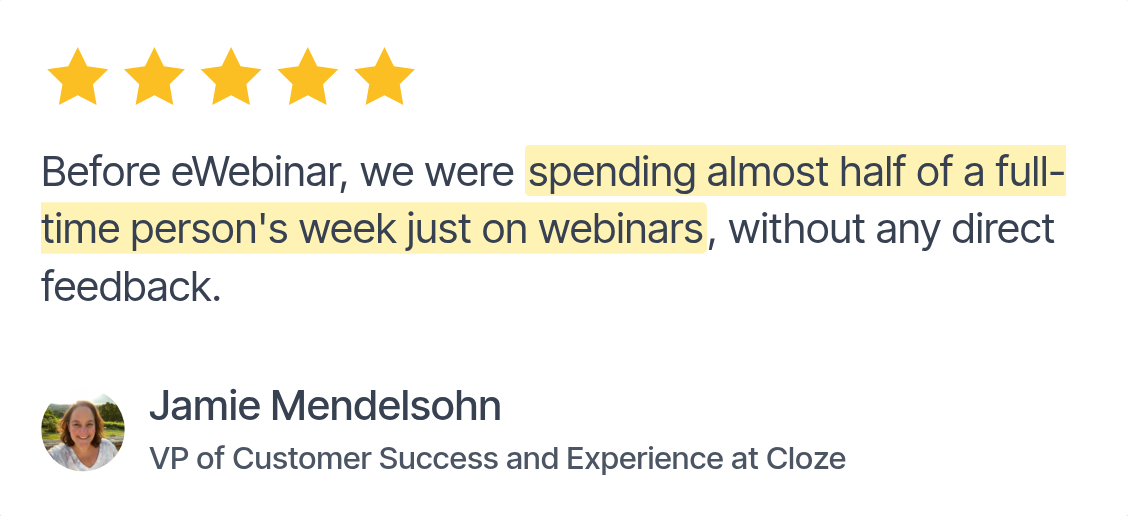
That creates a challenge for trainers too. Repeating the same session live every week takes a lot of time and quickly becomes exhausting. Jamie Mendelsohn at Cloze described their experience this way:
“We used to spend half a person’s time weekly presenting live webinars without any direct feedback.”
Brokers interviewed by NAR have tried reminders, more relevant topics, hybrid sessions, incentives, and feedback to improve attendance. Those can help, but a live session still happens at one time, and most agents are with clients when it starts.
Adding more live sessions won’t solve it either. An agent’s daylight hours belong to clients, so many can only train after hours or at night, when your team isn’t working. With live, you’ll only ever reach a fraction of your agents, and that’s not a problem you can hire your way out of.
But the agents who miss your live sessions still want the training. They can’t be there at the time you picked. So plan for them from the start. For every session on your calendar, decide how an agent who misses it will get the same content. Then decide how they’ll get their questions answered.
3. Record your best sessions once and make them available on demand
Scheduled live training will always miss most of your agents. So make your trainings, especially the repeatable ones, easier to access by making them on demand. Here’s a simple approach that works:
- Have your trainer record each session once
- Turn it into an interactive, on-demand video session with chat, using a platform like eWebinar
- Make it available any time, so agents can join whenever it suits their time zone and schedule
There’s another benefit, too. Recorded training is often better training.
When you’re not presenting live, you can plan the session properly, cut the housekeeping and interruptions, and keep only the parts agents need. A one-hour live session can often become a focused 20- to 25-minute video that an agent can fit between appointments.
It also means you’re no longer asking a trainer to repeat the same hour-long presentation every week. You can use that time to create shorter, more intentional sessions for different experience levels instead.
Video libraries and many learning management systems are other learning paths that are on demand. But they don’t give agents a way to ask a question after they hit play. A static video also has no chat and no registration, so you don’t know who watched it and can’t follow up with the agents who didn’t.
eWebinar closes both gaps.

eWebinar turns your video into an interactive, on-demand session with chat that agents can join any time. Agents pick a time that fits their schedule and interact with the session as they watch. If they have a question, they can send it through chat, and trainers can reply right away, or later by email if no one’s around.
Dusty Jostes at Flexmls says the team delivers 1,000 hours of training a year with eWebinar. Attendance rate rose from 30% on Zoom and GoToWebinar to between 60 and 70% on eWebinar.
Want to see how eWebinar works? Join our on-demand demo, which runs on eWebinar.
4. Build interaction into every session so agents stay engaged and you learn what they need
Static video, the kind that sits on a landing page or YouTube, falls short because of how it’s delivered. The same video performs very differently depending on how agents receive it. Method of delivery is part of the content itself. A 45-minute video with no interaction is easy to start and even easier to abandon. Think about the last time you watched a training video with no way to participate. You probably opened another tab, checked your phone, or closed out entirely.
You can prevent your agents from doing that by building interaction directly into each session in eWebinar. Add polls to learn what agents need and gather feedback, and quizzes to check understanding. Put tips on screen at key moments, and ask agents to rate the session so you know what’s working.
eWebinar offers more than 25 built-in interactions that you can place throughout the session to keep agents involved and collect data. Every response tells you something about what agents need, which helps you plan the next training.
Within eWebinar, the ability for agents to ask questions through chat makes a big difference to the learning experience. Private chat gives every agent a direct, one-on-one line to your team while they watch. That communication is what makes on-demand training feel personal, so it doesn’t have to be live.
5. Give every new agent onboarding the day they join
If you want agents selling and producing as soon as possible, give them a way to start onboarding the day they join. If new agents join every week but onboarding runs once a month, motivation can drop while they wait. Structure onboarding as a set of short, on-demand videos that agents can complete in order and at their own pace.
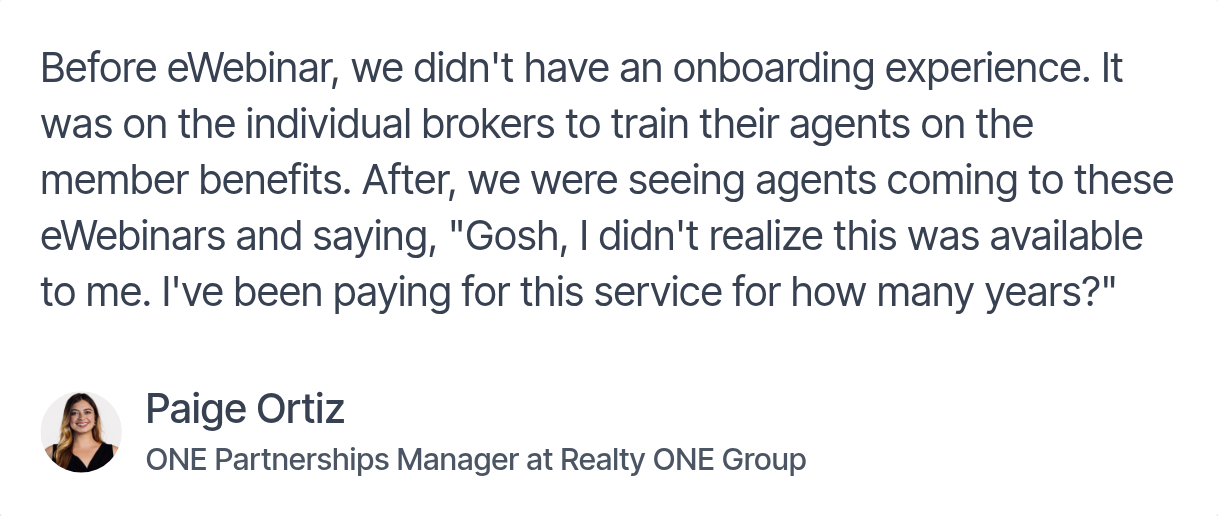
Realty ONE Group saw the difference once onboarding was available on demand. Paige Ortiz, its ONE Partnerships Manager, described it this way:
“Before eWebinar, we didn’t have an onboarding experience. It was on the individual brokers to train their agents on the member benefits. After, we were seeing agents coming to these eWebinars and saying, ‘Gosh, I didn’t realize this was available to me. I’ve been paying for this service for how many years?’”
Treat onboarding as a clear path with defined milestones. Start with a welcome session, then CRM setup, transaction management, tech stack, market knowledge, and lead-generation fundamentals. Each session should build on the previous one. Use a real estate agent onboarding checklist to map training milestones for 30, 60, and 90 days.
6. Track what agents watch, skip, and complete
You can’t improve a training program if you don’t measure how agents engage with it. At many brokerages, “measurement” only means checking who showed up to live sessions, but attendance tells you little about how well the training works.
eWebinar’s analytics can track which agents completed the training and where they dropped off. They also show how agents responded to interactions like polls and quizzes, and whether they asked questions. In eWebinar, you decide what counts as completion based on watch time and how agents respond to interactions, and completion certificates can go out automatically.
Use that data to see which sessions work and which don’t. If you notice agents consistently leave a session at the same point, examine what happens there and consider re-recording or restructuring. If another session has strong completion and engagement, use its structure as a model for future training.
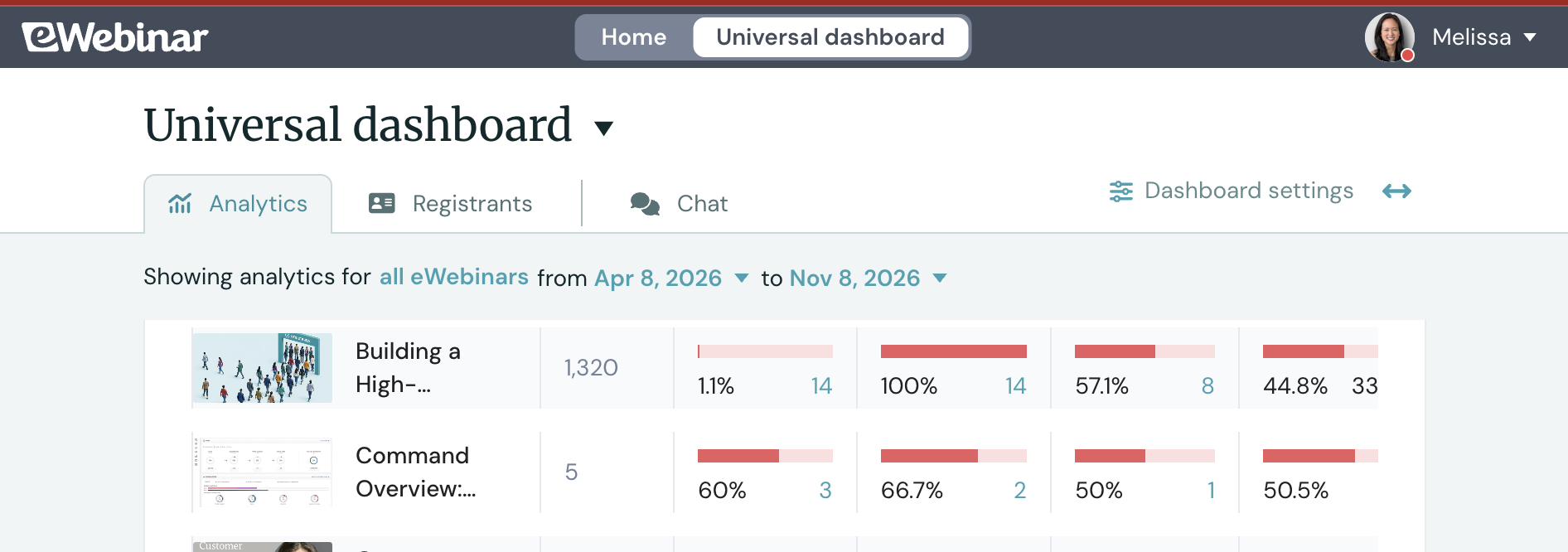
Kelly Bojarski, Director of Training Systems at Inside Real Estate, uses this data to plan training sessions.
“As a director, I’m always looking to analyze things so eWebinar’s robust analytics and reporting allow us to dive in really deep and see things like, where are people logging in from? How are they reacting? What’s the best time frame to run this session? We get so much more out of it than we ever did from standard attendance reports using other solutions.”
You wouldn’t get that kind of visibility from a calendar and spreadsheet attendance log.
Give Agents Training They Can Take on Their Own Time
Live training still has its place. Save it for sessions that benefit from being live, like kickoffs, guest sessions, and one-on-one coaching. For the training your team delivers again and again, put it on demand so agents can take it when they have time.
Start with the session you repeat most often, probably orientation, onboarding, or CRM setup. Once agents can take it on their own schedule, you’ll see who completes it, what questions come up, and where people get stuck. That gives you a much clearer idea of what training to build next.
eWebinar helps you turn pre-recorded videos into interactive, on-demand training sessions with chat, so agents can learn without needing a trainer to present every time.
You can see how brokerages use eWebinar to scale agent training, or join our on-demand demo to experience it the way an agent would.
FAQs
How do I get real estate agents to show up to trainings?
Make your training available whenever agents are free. Agents run their own schedules, so if you only offer one time slot, you’ll miss most of them. Put your repeatable training on demand, add interactions, and give agents a way to ask questions through chat. With eWebinar, agents can join on-demand video sessions any time. Your team replies right away, or later by email if no one’s around. You can also tie completion to benefits like lead access, mentorship, or preferred status within your firm. Join our on-demand demo to see how it works.
What should a new real estate agent’s first 90 days of training include?
Start with the essentials, like your CRM, transaction management process, and how leads get assigned. Then cover lead generation, prospecting, listing presentations, buyer consultations, negotiation, and local market knowledge. Put the sessions in order so new agents always know what to complete next. Our real estate agent onboarding checklist maps out the first 30, 60, and 90 days.
What’s the difference between an LMS and on-demand video training?
A learning management system (LMS) is software that hosts courses, tracks completion, and maintains training records. On-demand video training is a delivery format that lets viewers access recorded sessions whenever it suits them. Many brokerages use both. An LMS handles full courses with documents, videos, tests, along with tracking and certification. eWebinar, an on-demand video platform with chat, adds interactivity and chat to automated sessions, where agents can ask trainer questions. You can embed eWebinar inside your LMS as the interactive video module, or run it alongside your LMS so agents can choose how they learn. If you don’t have an LMS, eWebinar works on its own.
How do I increase agent retention at my brokerage?
Get new agents producing sooner. When onboarding waits for next month’s class, motivation drops, and some agents never get going. Give every new agent onboarding the day they join, and a way to ask questions while they learn. Offer a variety of trainings on all the products you offer, as well as best practices on how to sell better and close deals. Be a resource for agents to help get them producing as soon as possible.
Curious to see how eWebinar can help run your demos, onboarding, and training sessions on autopilot?
Watch a one-minute explainer video for a quick overview of the eWebinar platform. Or, better yet, join our on-demand demo to learn more!