Quick Summary
Plenty of brokerages add body after body to their roster, only to watch total volume slide. That’s because the new agents who come in close fewer deals than those who leave. If you want top producers, your recruitment strategy has to change. You need a target list, sharp offers, and the means to give prospects a discreet pitch. eWebinar provides automated, interactive sales demos that candidates can explore privately on their own schedules.
Your Agent Count Can Grow While Production Falls
In 2025, roughly 230,000 agents changed brokerages, about 16% of the industry. They took $590 billion in sales volume with them, according to Courted's annual recruiting and retention report.
In response to the churn, the big brands signed 1.9 agents for every one they lost. Yet, 81 of the 100 brands recruited agents who sold less than those who left: $1.44 million in annual sales volume versus $2.11 million.
So, is your headcount increasing while agent production falls? This guide covers a proven process for recruiting real estate agents who close transactions.
Why Listen to Us?
In real estate, the agents worth recruiting can’t be seen looking, so we help close the gap wherever brokerages and franchises can’t pitch in person. Our experience and success scaling recruitment, training, and lead generation inform this guide.
Howard Chung, VP of Franchise Development at John L. Scott Real Estate, uses eWebinar to connect curious real estate professionals with his team and franchise owners to discuss their successes and growth strategies. The results led him to expand eWebinar’s use to help individual franchise owners drive conversions.
What Does Recruiting Real Estate Agents Mean?
Recruiting real estate agents is the ongoing work of finding licensed agents and getting them to move their business to you. It covers two distinct processes that many people consider the same:
- Attracting brand-new licenses. These are agents with a real estate license, but little to no sales experience yet. Reasons for considering employment include mentorship, training tools, and market presence for growth.
- Winning over producing agents. These agents are licensed, experienced, and typically already high-performing elsewhere. Reasons for considering a switch include better commission splits, new networks, or specialization.
While both matter, the timeline and the pitch are completely different for recruiting each one. To understand the stakes, we’ll recap how agents approach employment within the real estate industry.
Despite a three-year-long lull in the housing market, the National Association of REALTORS reports that 86% of real estate professionals are independent contractors. Its report puts the average agent at 13 years of experience, with up to 6-year tenures at one firm.
The verdict? Producing agents already have an established business or brokerage affiliation to protect. Winning them over means convincing them to move their book of business, pipeline, and professional brand to your brokerage.
Recruiting real estate agents is nothing like simply filling a job opening. It takes precision, and we’ll walk you through each step.
5 Steps to Recruiting Real Estate Agents
1. Decide Who You’re Recruiting, and Price the Difference
Before you write your recruitment ad, work out which type of agent brings more value to you. Your brokerage earns a percentage from the property sales its agents generate, so an agent who sells more is typically worth more revenue.
For context, the average real estate agent made $59,200 in 2025, whereas agents with over 16 years of experience averaged $88,500, which is a nearly $30,000 gap in earning power. Raw headcount is just a vanity metric; sales volume is what keeps the lights on, which is why landing seasoned producers should be a primary focus.
That doesn't mean you ignore new agents entirely. It just means you treat the two categories as separate playbooks. For new agents, you'll naturally need higher volume to hit your goals, so track your total hires alongside their average output over their first twelve months.
2. Build a Target List From Public License and Production Data
You can’t recruit producers you haven’t identified, and if you rely on memory, you’ll come up with the same few names every single time.
Build your list from public records. Every state publishes a free licensee lookup, like the Texas Real Estate Commission’s license holder search or the California DRE public license lookup. If you’re recruiting across state lines, ARELLO’s central database carries more than 4.3 million licensee records across 44 jurisdictions.
While license data gives you the names of active agents, your MLS tells you who is making sales and the volume they’re bringing in. Create a tiered list of agents, ranking them by production level.
- New agents: first-year licenses building their business
- Mid-tier producers: operating around the market median
- Top producers: doing at least twice the market median
Recruiting software for brokerages, like Courted, can flag agents who change firms or whose listing activity suddenly drops. Those changes can signal that an agent is open to a move and worth a conversation.
Do this step right, and you’ll finish with a refined list, with a reason to call each person.
3. Sharpen Your Offer Before You Pitch
Some agents often ask about the split upfront, so have your answer ready and publish it if you can. Some brokerages already do. For example, eXp Realty publishes an 80/20 split with a $16,000 annual cap, alongside their onboarding and monthly fees.
When your competitors’ numbers are just one click away, your “let’s discuss compensation” sounds like you’re hiding something. But while the split is a major consideration, it’s rarely enough to get a top producer to switch affiliations.
Real’s 2026 survey of 153 agents found that 39% cited commission splits and earnings as their top consideration. Revenue share and equity came next at 14%, while only 12% prioritized company culture.
That picture changes significantly by career stage. While earnings were the top priority for 53% of agents with 11–19 years of experience, only 25% of those with 20+ years prioritized them. Among the most experienced agents, 22% prioritized revenue share and equity opportunities.
Agents with under two years of experience cited lead generation 39% of the time, compared with just 11%–21% across the more experienced groups.
So, build three versions of the same offer:
- Veteran producers. Lead with low commission splits, a high marketing budget, and strong administrative support; emphasize opportunities to strengthen their personal brand
- Mid-career producer. Lead with a competitive cap on commission splits, some marketing budget, and the admin you take off their plate
- First-year agent. Lead with lead flow and mentorship, and be honest that the ramp to consistent production is long
It’s tempting to offer everyone your best split and call that a strategy, but you need targeted offers for professionals in different career stages. If you only compete on economics, the brokerage down the road wins by a single point.
4. Give Top Producers a Private Way to Explore the Move
If you fix only one thing about how you recruit experienced agents, make it this: protect their privacy.
A producing agent has a broker, a team, and a reputation in a local market. If they sit in your office on a Tuesday evening, chances are it’ll get around by Wednesday. So, how do you recruit top producers in complete confidence?
The typical workaround is coffee or a quiet lunch, but you can only meet so many agents in a month if you only pitch in person.
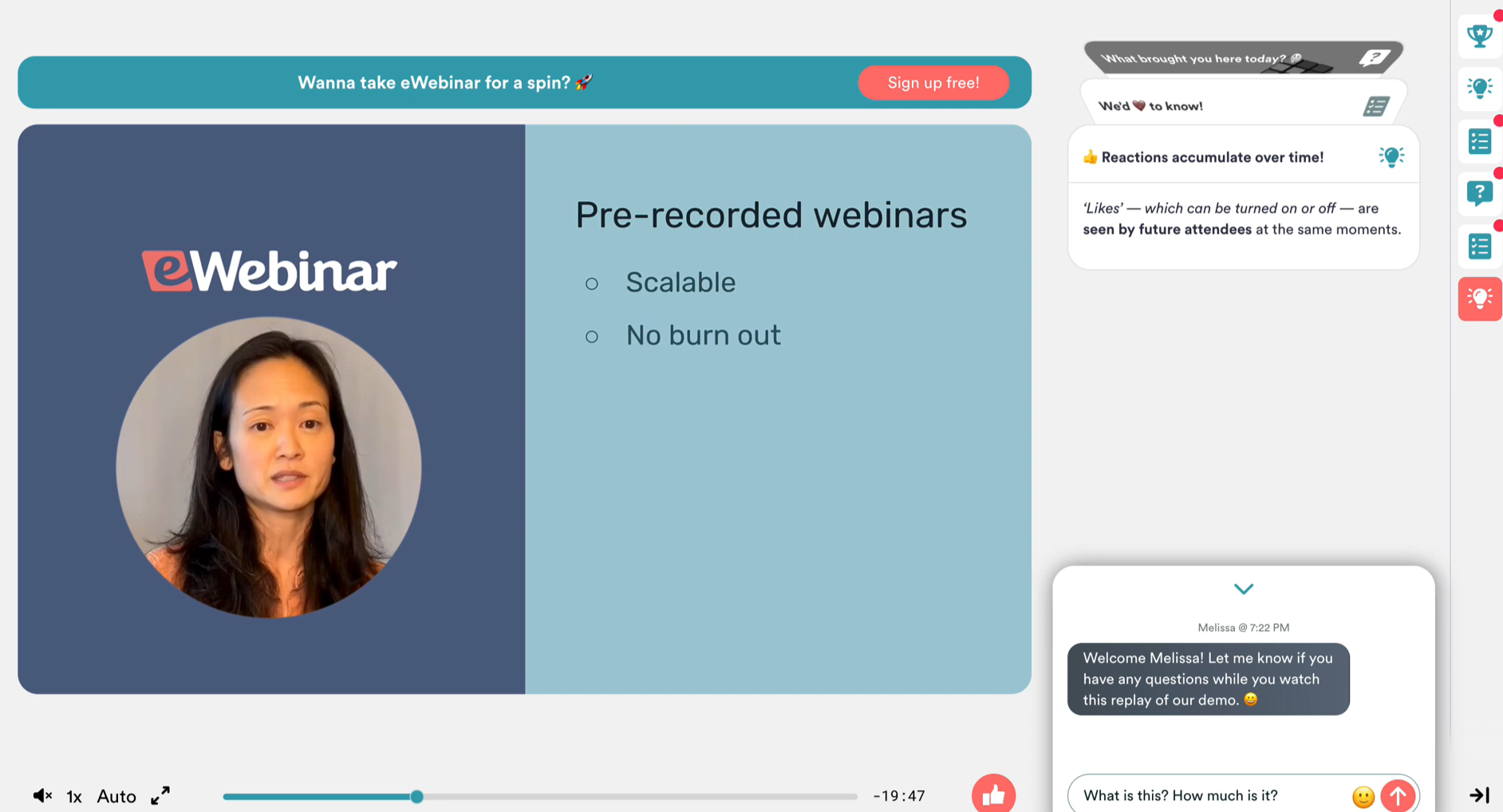
An on-demand eWebinar solves both problems, giving agents full discretion while expanding your reach. You record your pitch once, covering the benefits of your company, splits, caps, lead distribution, marketing support, and the first 90 days, and make it available around the clock. Agents looking to make a quiet move research on their own time, long after office hours, without tipping off their current broker.
When setting up this pitch on eWebinar, you can also:
- Capture details at registration. Ask for name, email, current brokerage, and past-year production upfront. Every viewer becomes an actionable lead.
- Keep conversations real-time. Chat allows agents to ask sensitive questions mid-presentation. If someone on your team is online, they can answer in real-time; if not, the response routes straight to the agent's email. Timing is everything in recruiting. When an agent gets frustrated with their broker, they want answers immediately. We allow you to strike while the motivation is fresh.
- Use interactive polls to qualify. Gauge their activity level by asking about their closed sides, what frustrates them about their current company, and if they want to book a private conversation.
- Offer flexible scheduling. Provide immediate access, a "just-in-time" session starting in a few minutes, or scheduled recurring slots so they can watch whenever it suits them.
Make your recruiting presentation accessible 24/7 and share the link through direct messages, recruitment emails, ads, or your website. Agents weighing a move can watch it in private on their own time, without news travelling down the grapevine.
5. Keep Career Night, but Redefine its Job
Career nights still have a place, but you just have to be realistic about who attends. The room is almost always made up of newly licensed agents, not seasoned producers.
That isn't a reason to cancel the event. Brand-new agents make up 11% of total NAR membership, according to the 2026 Member Profile. If you ignore them completely, you might not have a talent bench three years down the road. The key is to treat career night as the front door for your new-agent pipeline, rather than judging its success by whether a top producer walks through the door.
You also need to plan for the learning curve. New agents require significant hand-holding early on to learn basic contracts, open house logistics, and transaction workflows. That guidance takes real time, meaning revenue will be slow to materialize.
Before committing to a heavy onboarding program, map out what that ramp period costs. Add up the training hours a new hire needs during their first 90 days, identify who is delivering that instruction, and factor in the value of their time. That total reflects your true cost to onboard a new agent, which usually far exceeds what you spent to recruit them.
A common mistake brokerages make is only running live orientation once a month. It forces agents who come on board to wait weeks before starting.
Automating your baseline orientation with eWebinar lets new hires start training the day they join, keeping motivation high while they wait for the in-person session.

For example, Inside Real Estate shifted from manual weekly sessions to automated daily onboarding, allowing a single trainer to support hundreds of sessions a week without losing touch with new hires.
6. If You’re a Franchise, Target the Owners
Franchise recruiting is a very different ballgame from brokerage recruiting. A local brokerage looks for agents in its immediate market, while a franchise targets independent brokerage owners across state lines and multiple time zones.
Because you are talking to business owners instead of individual agents, the pitch needs to change completely. An established owner isn't looking for standard agent perks; they want a clear, logical business case. They need to know the exact fee structures, the costs involved in switching brands, and what support they actually get in exchange for royalties.
Those numbers drive the conversation right away. For example, opening a Century 21 franchise involves an initial fee of up to $25,000, a 6% gross revenue royalty, and a 0.50% brand marketing contribution. Converting an existing independent brokerage typically ranges from $34,670 to $279,000, while a ground-up start-up can cost between $116,170 and $466,300. Any serious owner will analyze those financials long before they ever agree to a call.
Discretion is even more critical at this level. If word leaks that an owner is thinking about changing flags, it can rattle their staff, trigger agent churn, and create unnecessary stress with their landlord. On top of that, flying around the country to walk every prospect through the exact same financial deck simply isn't a sustainable way to scale.
The workaround is to create a private, on-demand overview designed specifically for prospective franchise owners. A single recorded presentation can break down brand benefits, the financial model, conversion roadmap, and support systems in detail. Owners get the answers they need confidentially and on their own schedule, while your team expands its reach without constantly living out of a suitcase.
Where to start this week
Recruiting real estate agents gets easier once you stop treating each prospect as a one-off pitch. Build a list of prospects from public records; group them in tiers by experience; create a pitch covering your splits, caps, fees, and offers that appeal to the tier you’re hiring from.
Pitching in person alone isn’t practical at scale. Automated recurring presentations give top producers a private way to get to know you without any commitment. You record your pitch once and put it out there. They can still ask questions through chat, and you get to build a relationship with them.
Try eWebinar for free and turn your career presentation into a session agents can join privately on their time.
Frequently Asked Questions
How do I attract top-producing real estate agents to my brokerage?
Give them a compelling reason to move and a private way to evaluate your brokerage. To recruit veteran producers, lead with low commission splits, marketing budget, autonomy, and admin support.
Should I recruit new agents or experienced producers?
Recruit both, but with separate plans, targets, and pitches. Experienced agents need little training and produce immediately, while new licensees require months of coaching before their first closing, but they are your pipeline for future producers.
What do real estate agents look for in a brokerage?
39% of agents cite commission economics as their top consideration. However, priorities shift with experience. Agents with up to 20 years of experience increasingly prioritize revenue share and equity, while newer agents place more weight on lead generation.
Why do real estate agents leave their brokerage?
Agents leave for different reasons, from better economics and growth opportunities to stronger support and technology. Switching isn’t rare, but it hardly happens on a whim either: NAR’s 2026 Member Profile puts the median tenure with a current firm at six years.
Is it legal to recruit agents from another brokerage?
Generally, yes. Real estate professionals can consider and move to another brokerage, but recruitment must respect existing contracts, exclusive relationships, confidential information, and applicable state law. Focus discussions on your own brokerage’s offer, and get counsel to review any state-specific solicitation restrictions.
Curious to see how eWebinar can help run your demos, onboarding, and training sessions on autopilot?
Watch a one-minute explainer video for a quick overview of the eWebinar platform. Or, better yet, join our on-demand demo to learn more!