Quick Summary
Effective sales training requires more than just a single workshop. It comes down to five things: learning from your best reps, building deep product knowledge, standardizing the pitch, creating an objection-handling playbook, and making training available on demand. This guide walks through five practical steps to build that system.
Why Listen to Us?
We work with B2B sales teams every day who use eWebinar to train reps, deliver pitch walkthroughs, and scale enablement without adding headcount. That gives us a ground-level view of what actually works when building a sales training system and where most teams get stuck.
We also went through the same process ourselves. It took two months of live demos before our own pitch was consistent enough to automate. We draw the lessons in this guide from that experience.
Five Steps to Build an Effective Sales Training System
Step 1: Study Your Best Salespeople
Every sales team has a gap between its top performers and everyone else. Closing it starts with understanding what your best reps actually do differently.
Your instinct might be to ask your best reps how they sell. Don’t. They’ll give you a polished version that leaves out the small decisions, phrasing, and instincts that make them successful. The best insights come from their calls, so listen for patterns like:
- How they frame the problem before presenting the solution
- The questions they ask that other reps don’t
- The language they use when prospects push back
- How they handle common objections
Don’t stop at call recordings. Review demos, customer emails, and win/loss reviews to reinforce what you’re seeing. Then turn those insights into a repeatable playbook the rest of the team can learn from.
Step 2: Build Deep Product Knowledge
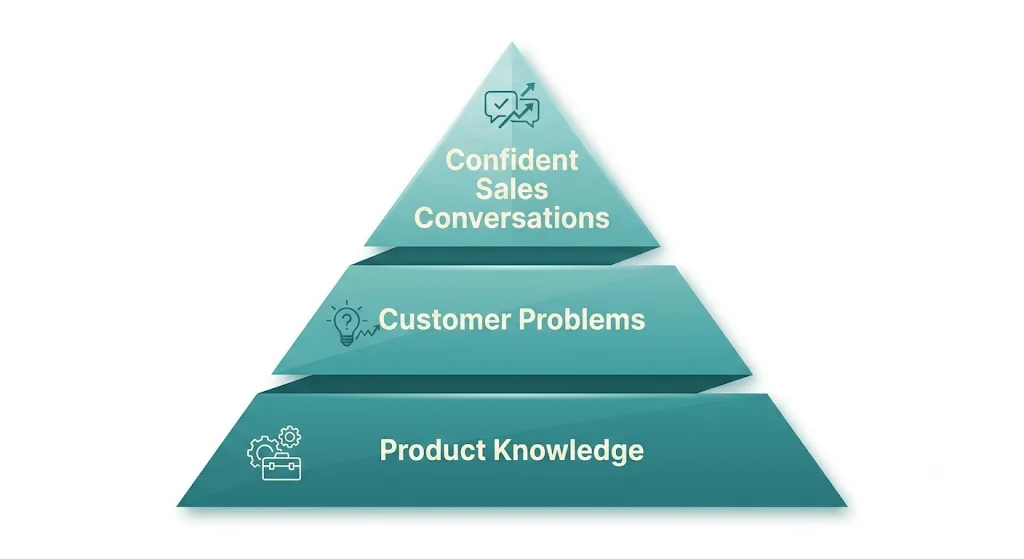
Reps who do not understand the product rarely sell it well. They hesitate, struggle to answer follow-up questions, and lose control of the conversation. Buyers notice.
Before a rep gets on their first call, they should be able to:
- Explain the product without relying on a script
- Connect features to real customer problems
- Handle common follow-up questions confidently
Once you’ve built a strong product training session, the next challenge is delivering it consistently as the team grows. eWebinar solves that by turning your best product walkthrough into an on-demand training video that every new rep can access.
Reps can watch it before their first call, revisit it whenever they need a refresher, and ask questions through chat instead of waiting for the next live session. Meanwhile, your senior team spends less time repeating the same walkthrough and more time coaching where it adds the most value.
Step 3: Standardize the Pitch
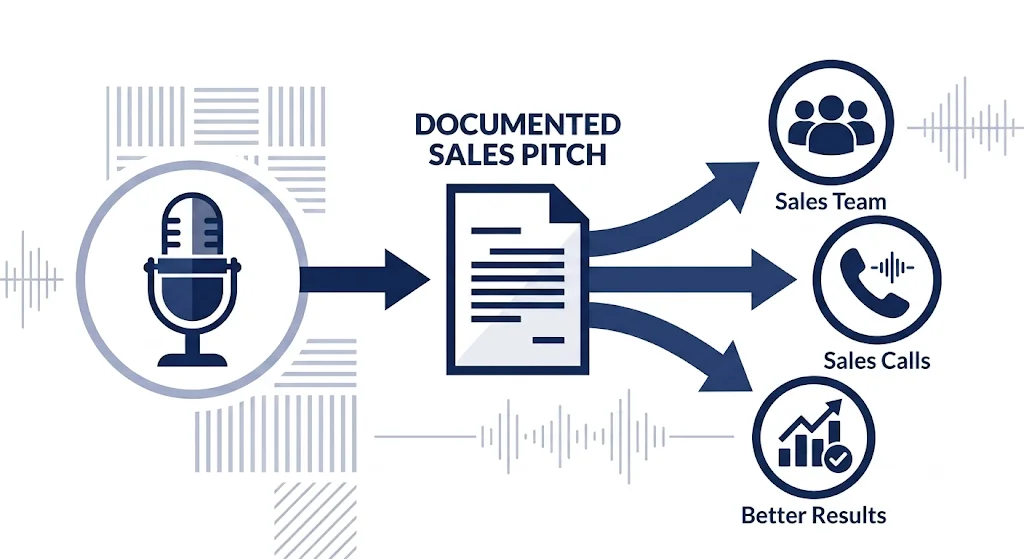
The best pitch in your organization should not live in one person’s head. It should be documented, recorded, and available to every rep.
Many sales leaders avoid this step because it means choosing a standard. That is uncomfortable. But without one, every rep builds their own version of the pitch, and the inconsistency eventually shows up in your results.
Record a version that is genuinely good and repeatable. It does not need to be perfect, but it should include:
- Clear pacing: Move naturally through the conversation without rushing or lingering too long on any one feature.
- Questions that keep the buyer engaged: Ask questions that uncover the buyer’s current approach, such as “How are you solving that today?” or “What’s the biggest challenge with your current process?”
- Proof points in the right order: Introduce customer success stories after you’ve established the problem they solved.
- Strong responses to common objections: Address concerns like pricing, implementation, or switching from a competitor without losing momentum.
- A clear next step: End with a specific CTA, such as booking a follow-up meeting or starting a free trial.
Recording the pitch turns individual knowledge into team knowledge. New reps no longer start from scratch, and experienced reps always have a reference point to come back to before important meetings or unfamiliar deal types. Everyone is working from the same playbook, even if every conversation unfolds differently.
Standardizing the pitch also makes coaching far more effective. Without a standard, coaching becomes opinion; with one, managers can compare real calls against a proven model and show reps exactly where to improve. When your pitch reaches that stage, you’ve got a version worth recording.
If you’re not sure how to structure it, our demo script workshop walks through the process, and the free AI Script Generator can help you produce a first draft in minutes.
Step 4: Build an Objection-Handling Playbook
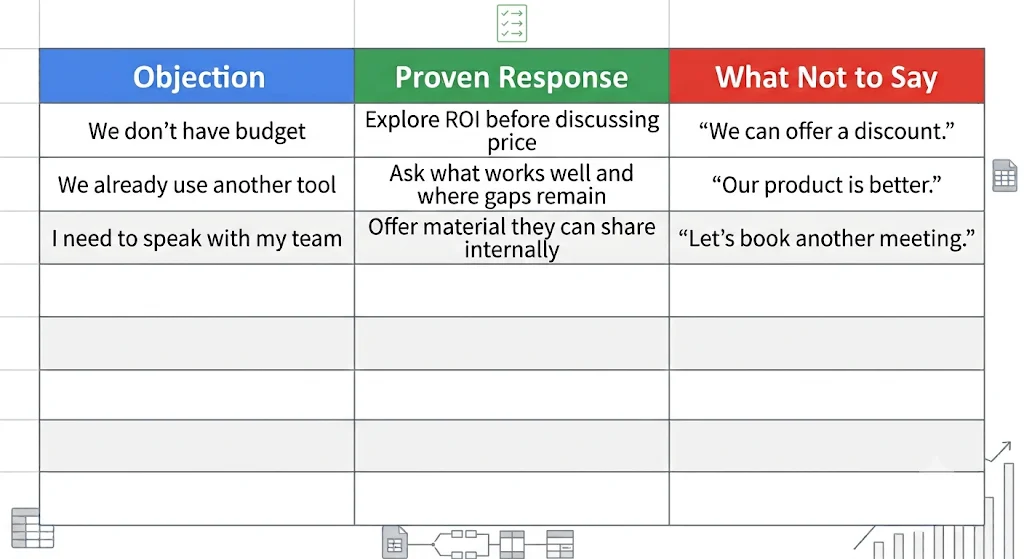
Every sales team hears similar objections. The difference is whether every rep responds with the same level of confidence and consistency, because that often determines whether the deal moves forward or stalls.
Instead of expecting reps to come up with the right answer on the spot, build a playbook around the objections they hear most often. For each one, document:
- The underlying concern: What is the buyer really communicating? For example, “We don’t have budget” often means “I don’t see enough value yet.”
- A proven response: Capture how your top performers consistently move the conversation forward. For example, when a buyer says, “We don’t have budget,” they might explore the return on investment before discussing price.
- What not to say: Responses that create friction, sound defensive, or stall the conversation. For example, “You’re looking at it the wrong way,”or “If price is the issue, we can give you a discount.”
In many cases, knowing what not to say is even more valuable than knowing what to say. The goal isn’t to memorize scripts. It’s to build confidence through repetition. The best reps have practiced these conversations so many times that they stop thinking about what to say and start focusing on the buyer.
Make objection handling part of ongoing training, not just onboarding. Role-play may feel uncomfortable, but it gives reps a chance to make mistakes, receive feedback, and refine their delivery before those conversations happen with buyers.
Learning through practice is far less expensive than learning through missed opportunities.
Step 5: Make Training Available When Reps Need It
Sales training should not end after onboarding. New reps often leave their first week feeling confident, but a few weeks later they’re in a live conversation trying to remember how to answer a common objection. They are not going to stop and search through training materials.
If the answer is not easy to find, most reps will rely on memory or improvise, meaning the same question gets different answers depending on who picks up the call. The solution is not more training. It is making existing training available at the moment it is needed. That might be:
- Before an important sales call
- When a new feature launches
- When a competitor comes up in a deal
- After a manager identifies a recurring coaching opportunity
The easier training is to access, the more likely reps are to use it. That is why short, searchable sessions consistently outperform long documents and slide decks. A ten-minute session on handling a specific objection before a call is often more valuable than hours of general training completed weeks earlier.
This is exactly the kind of interactive training experience we built eWebinar to deliver. Instead of waiting for the next scheduled session, eWebinar lets reps access training whenever they need it, revisit specific topics before important conversations, and ask questions through chat. That means your best training stays consistent, accessible, and scalable without requiring someone to deliver it live every time.
Putting It Together
A great sales team is built through systems, not luck. The best organizations identify what their top reps do, turn it into repeatable training, and make that knowledge available whenever the rest of the team needs it.
That process doesn’t stop after onboarding. As your product, market, and buyers evolve, your training should evolve with them.
If your team is still delivering the same product training live every week, eWebinar can help you automate those sessions while keeping them interactive through chat, polls, and knowledge checks. Your reps get consistent training on demand, and your team gets more time for the coaching that actually requires a human.
Watch the demo to see how it works.
FAQs
How often should you train your sales team?
Sales training should be continuous, not something that only happens during onboarding. New products, competitors, and customer objections emerge over time, so training should evolve alongside them. Regular coaching, role-play, and on-demand refreshers help reps retain knowledge and apply it consistently in real conversations.
What should a sales training program include?
An effective sales training program should cover product knowledge, a standardized sales process, objection handling, discovery, and real call examples from top performers. The goal is not simply to transfer information but to give every rep a repeatable system they can apply in customer conversations.
Should sales training be live or on-demand?
Both have a place. Live training is valuable for coaching, discussion, and role-play, while on-demand training works best for repeatable topics like product education, onboarding, and standardized sales pitches. Many organizations combine both so reps can learn live and revisit important sessions whenever they need them.
How do you know if your sales training is working?
Look beyond course completion. Strong sales training shows up in consistent messaging, better objection handling, improved conversion rates, faster onboarding, and higher quota attainment. Reviewing call recordings and coaching sessions can also reveal whether reps are applying what they learned.
What’s the difference between sales training and sales coaching?
Sales training teaches new skills, processes, and product knowledge. Sales coaching helps reps apply those skills in real selling situations through feedback, call reviews, and practice. The strongest sales organizations use both: training creates the foundation, while coaching reinforces it until new behaviors become consistent.
What’s the difference between delivering sales training live and on demand?
Live training lets instructors answer questions, adjust their delivery, and respond in real time. On-demand training works differently because it has to anticipate those questions before they come up.
That takes time. Run enough live sessions to understand where reps get stuck before recording the content. As new questions appear, continue improving the experience by adding links, interactions, or other resources where they’re needed instead of rebuilding the session from scratch.
Curious to see how eWebinar can help run your demos, onboarding, and training sessions on autopilot?
Watch a one-minute explainer video for a quick overview of the eWebinar platform. Or, better yet, join our on-demand demo to learn more!